DE
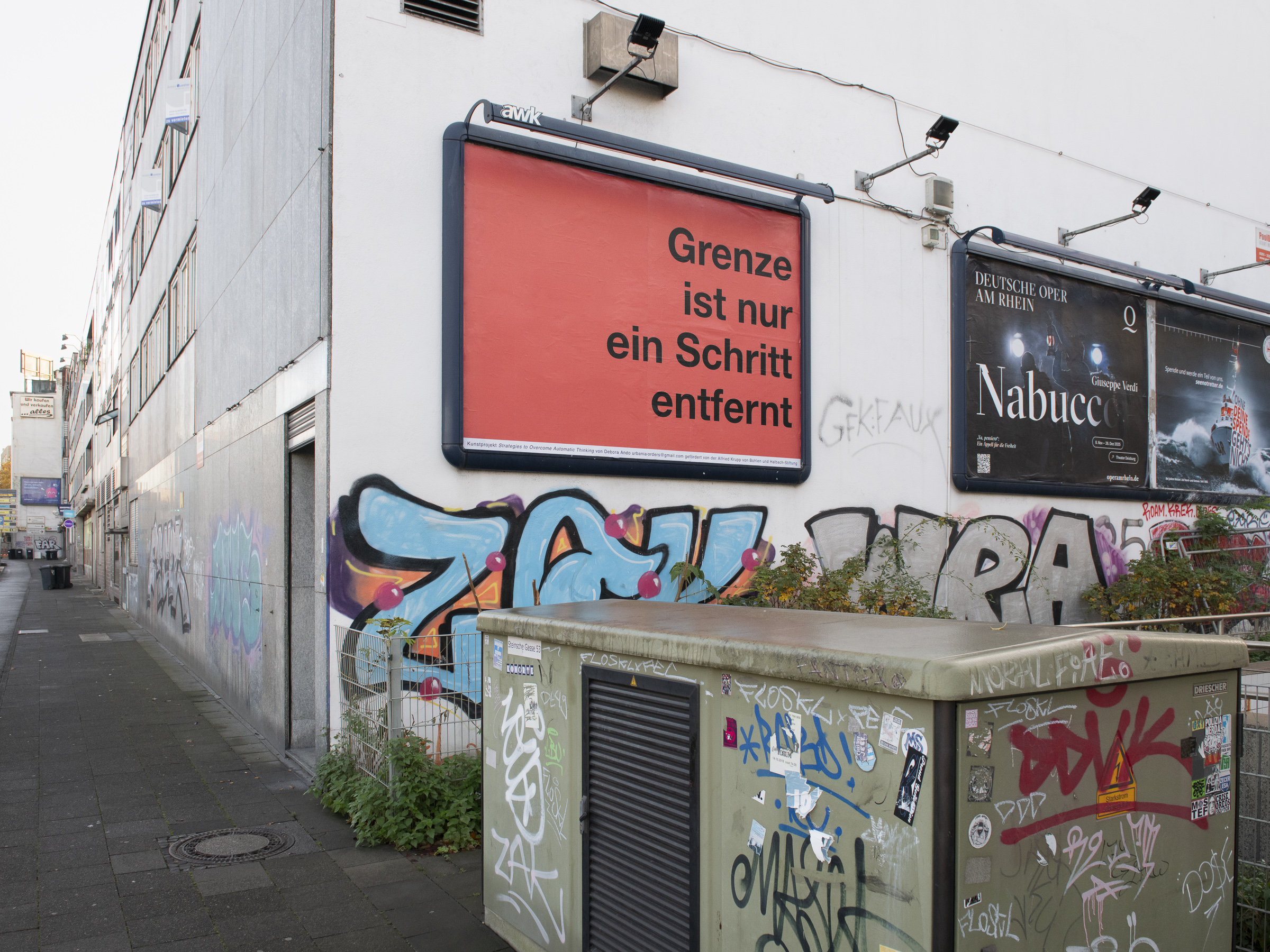
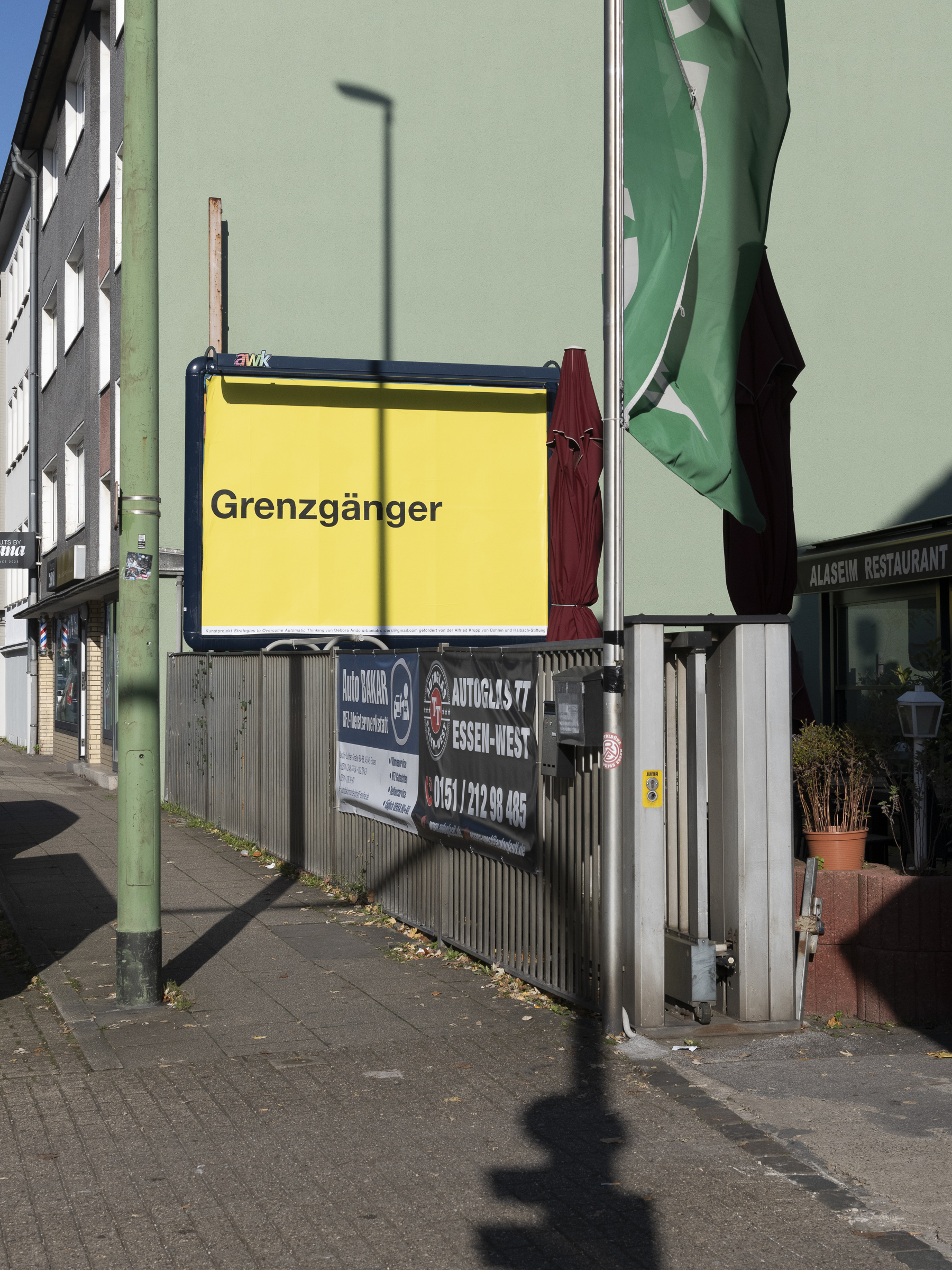
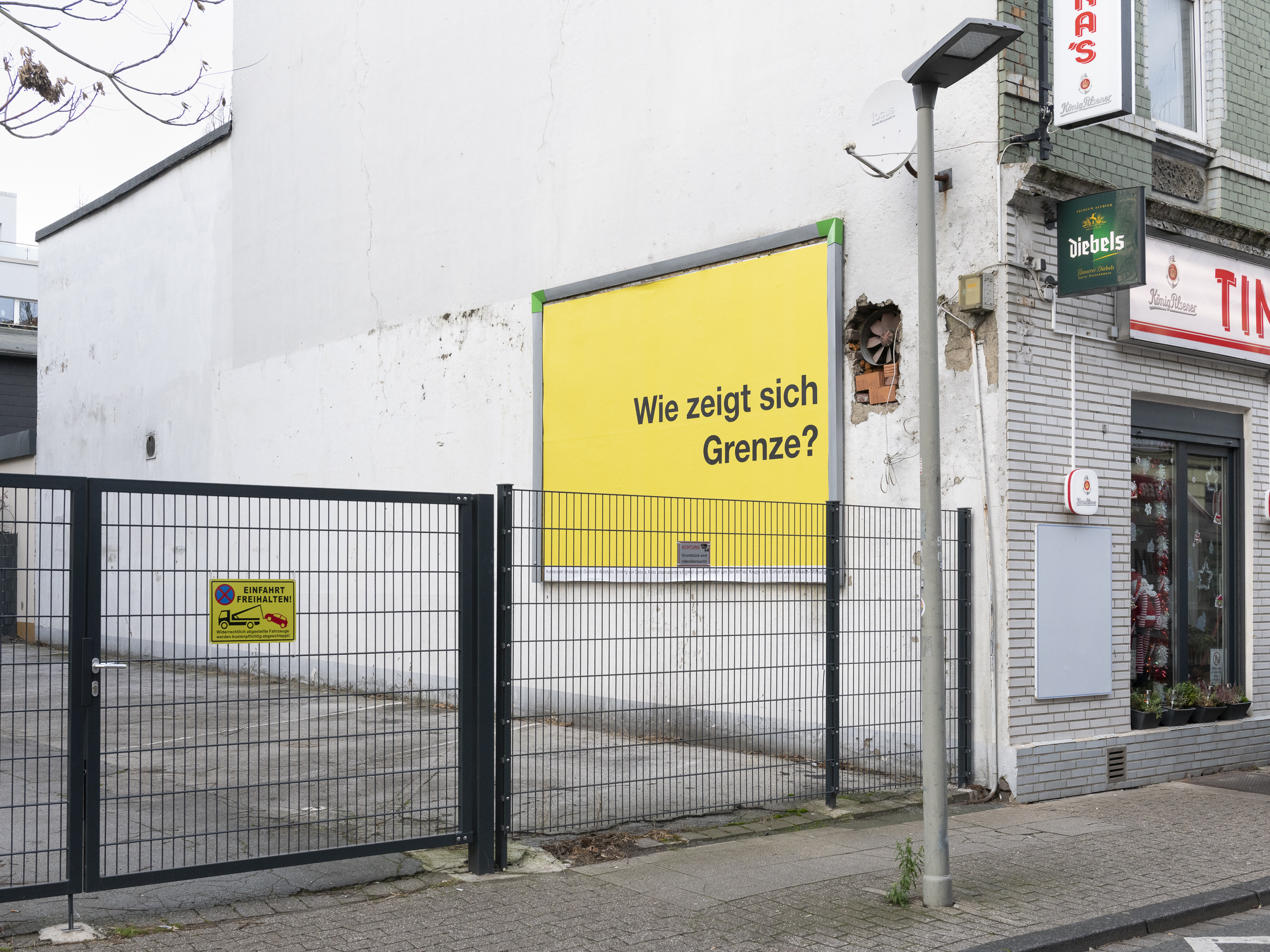
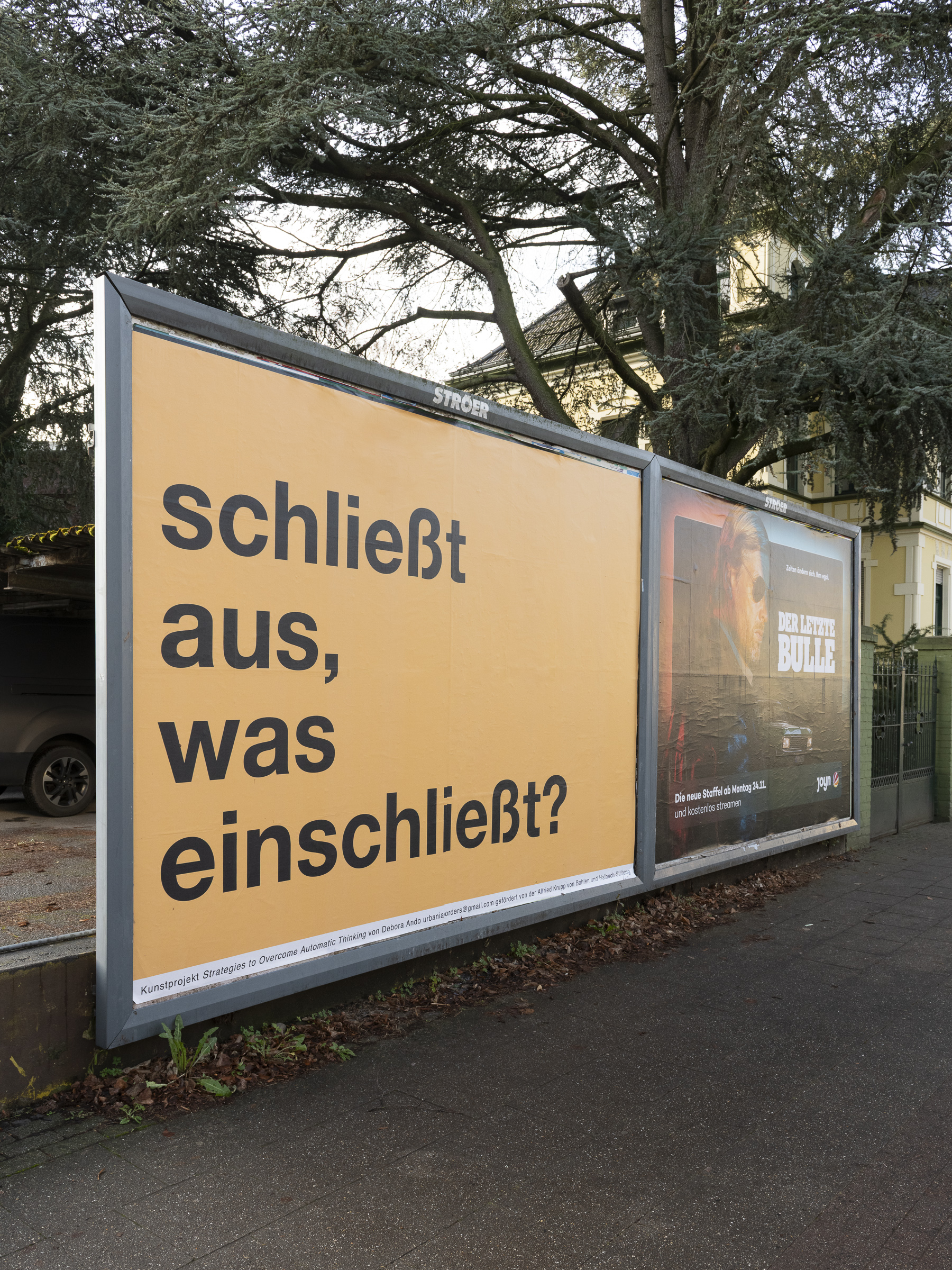
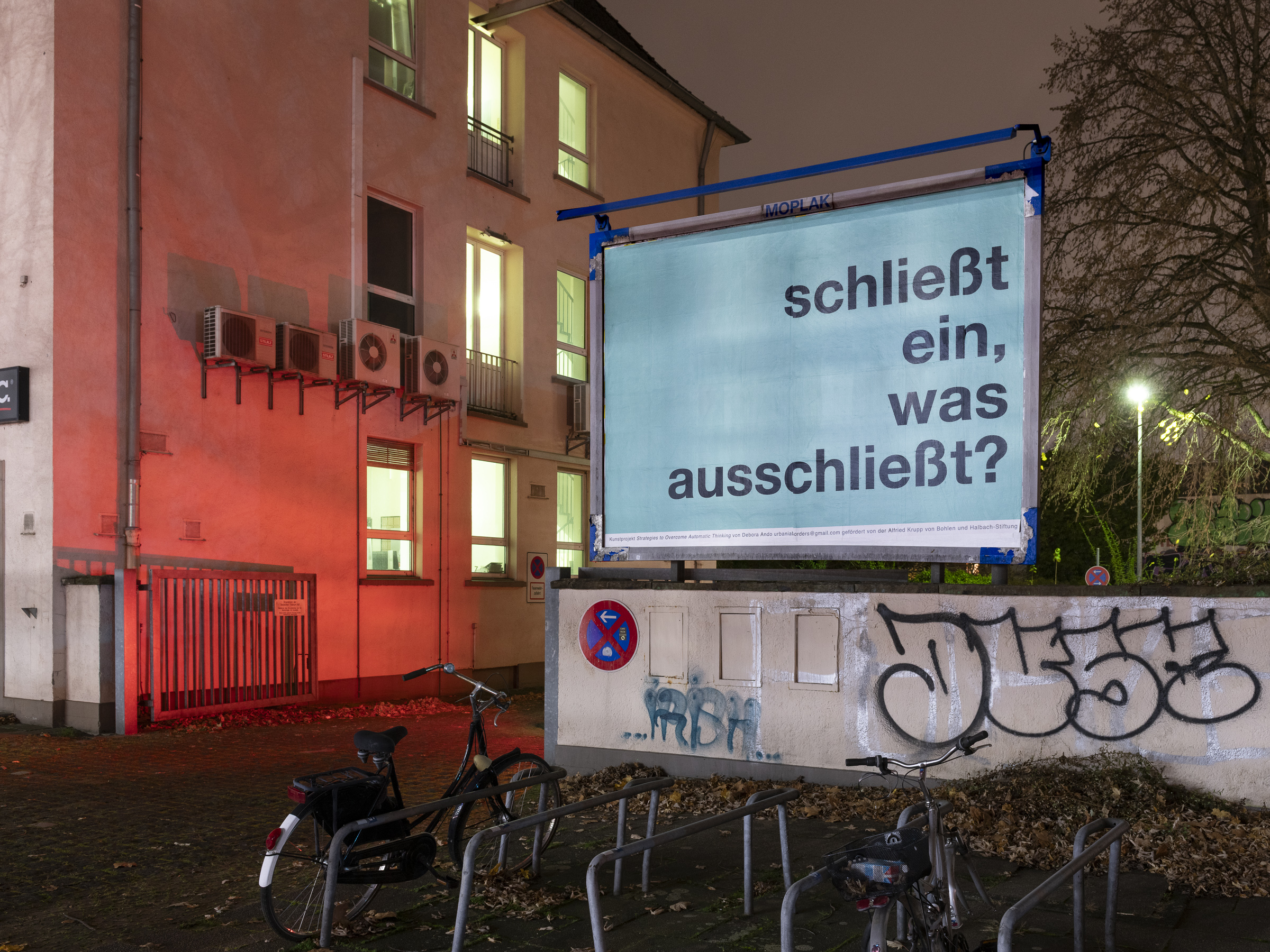
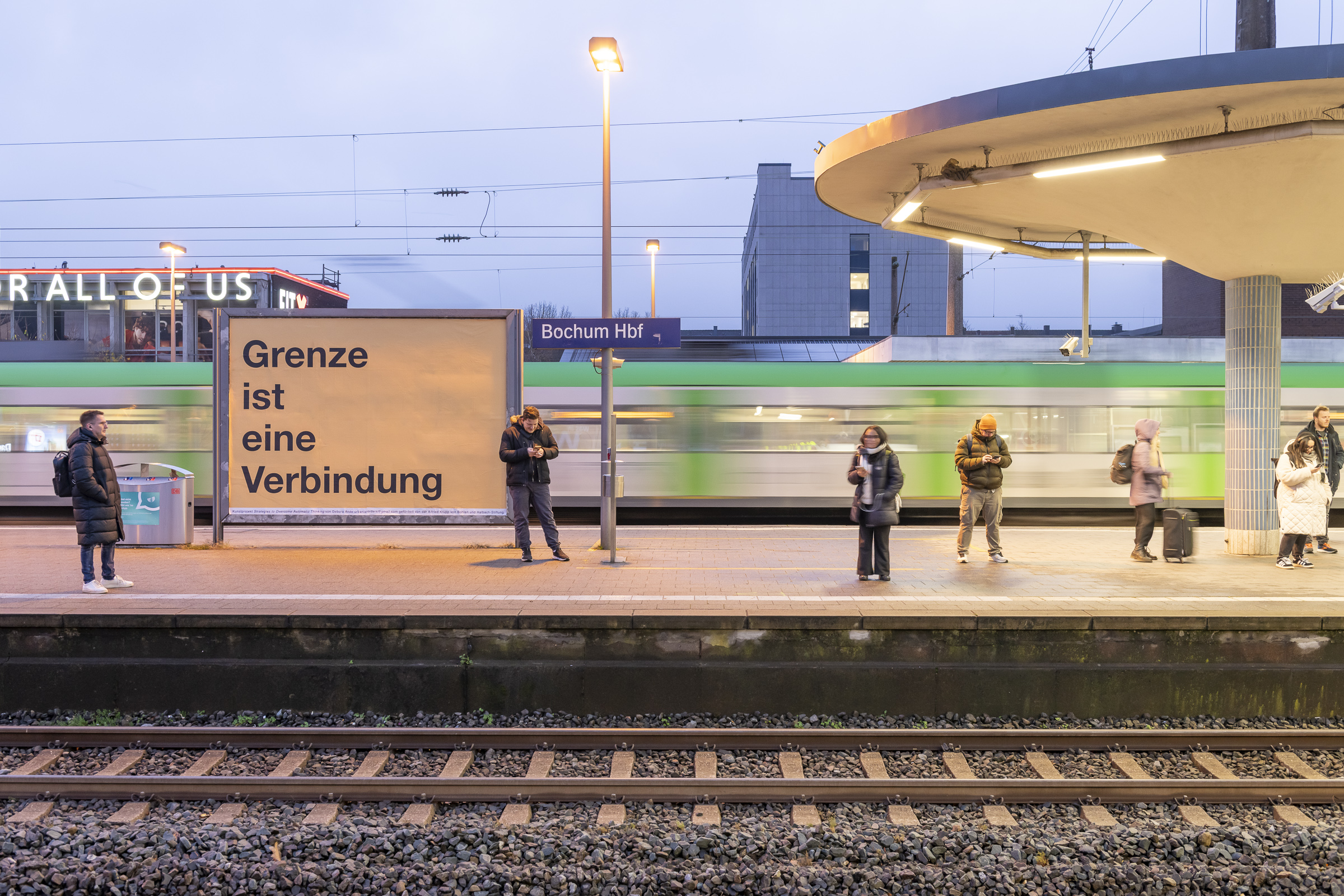
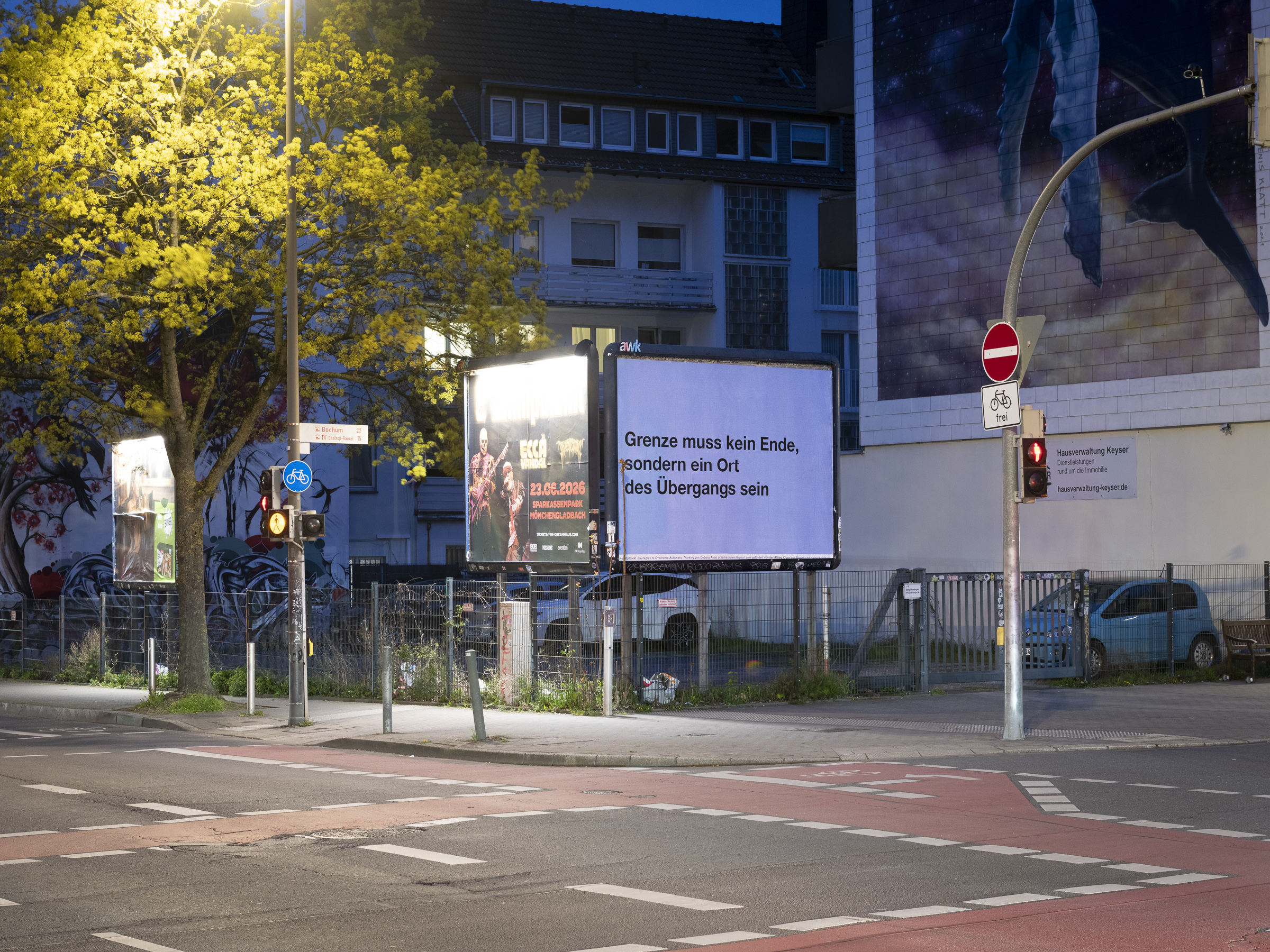
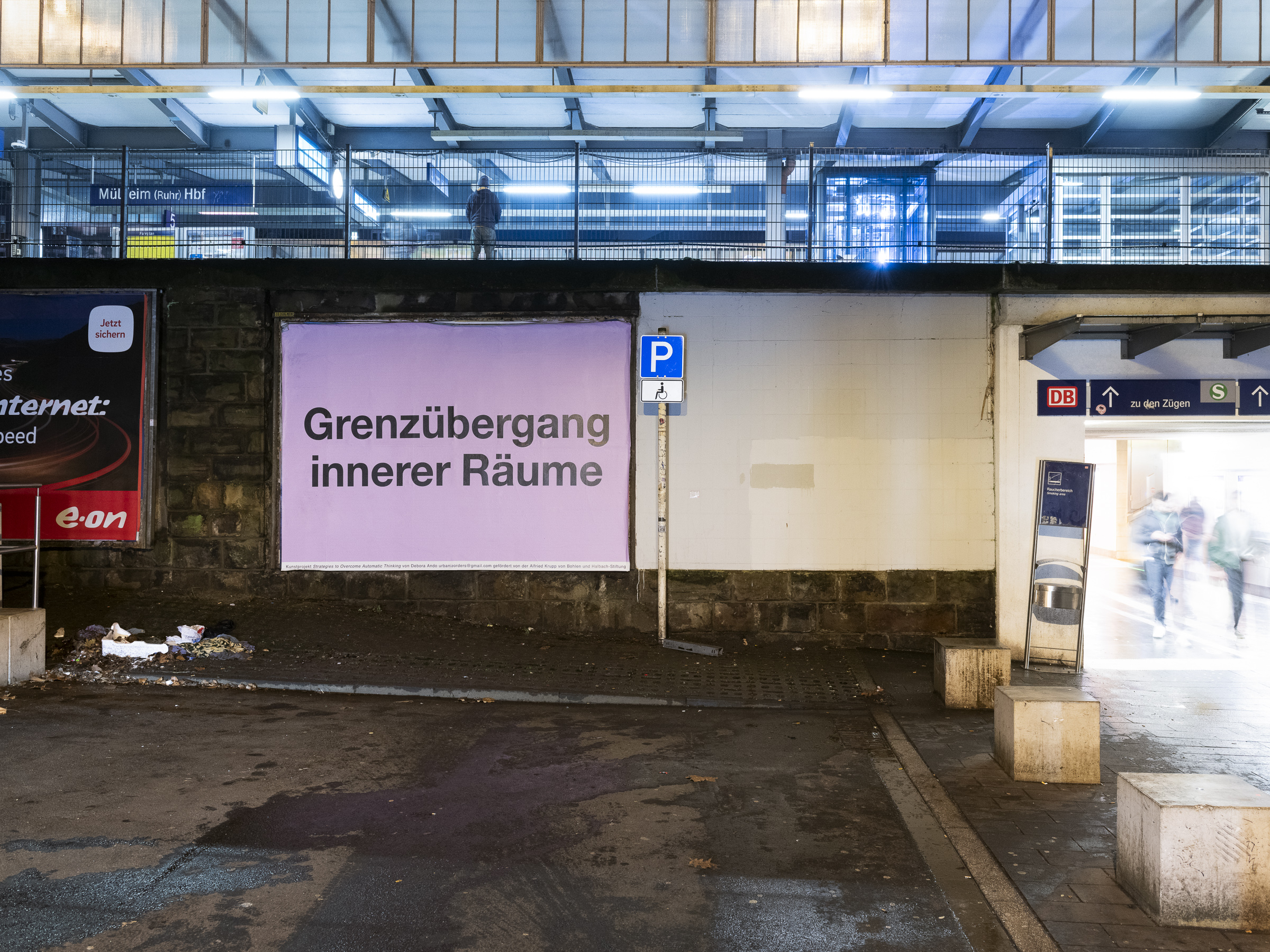
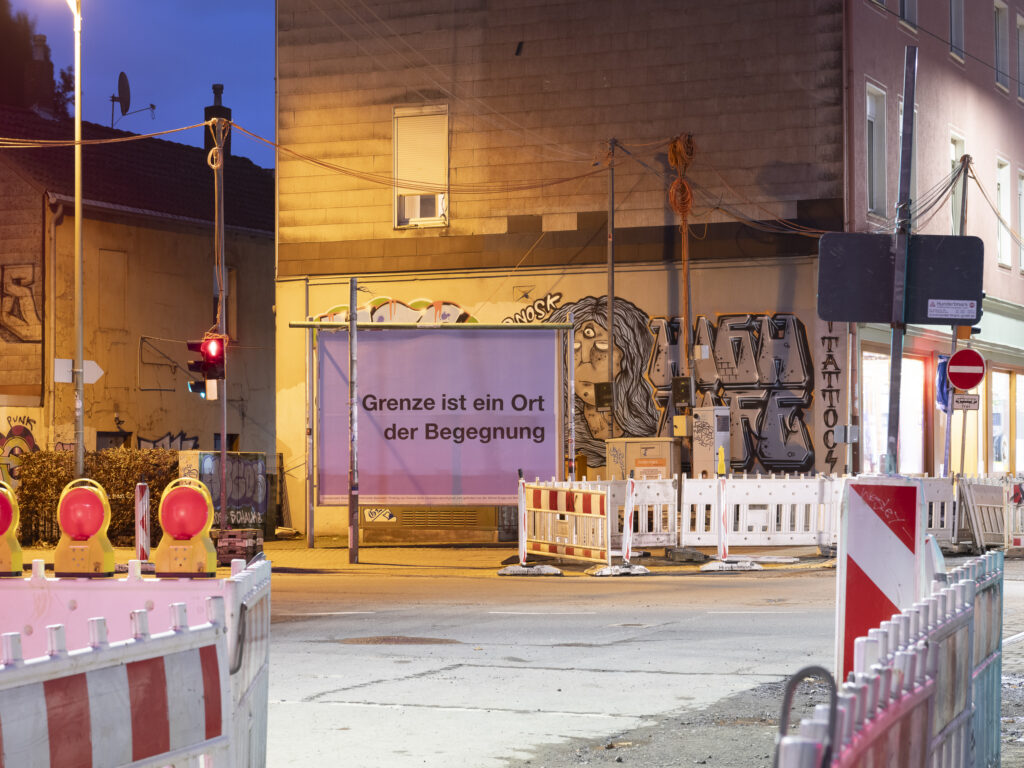
Strategies to Overcome Automatic Thinking besteht aus Textfragmenten, die als ortsspezifische Installationen mit Werbeplakaten in 13 Städten des Ruhrgebiets präsentiert werden. Sie hinterfragen die Wahrnehmung und Interpretation des urbanen Raums – nicht nur als Ort, sondern als dynamisches, sich ständig veränderndes Netzwerk von Beziehungen, Formen der Zugehörigkeit und Interaktionen. Sie spielen mit der Funktion ihres Mediums und erkunden die Fluidität der Sprache, in der eine direkte oder universelle Bedeutung nicht festgelegt werden kann. In manchen Fällen werden Wörter auf leicht unerwartete Weise verwendet, wodurch sich zusätzliche Interpretationsmöglichkeiten eröffnen. Statt feste Bedeutungen vorzugeben, laden die Arbeiten zu Neugier und Reflexion in alltäglichen Kontexten ein – auf Straßen, an Bahnhöfen und an Ecken der Stadt, in denen sonst alles als selbstverständlich gilt.
Die Typografie – und zu einem gewissen Maß auch der Hintergrund – wurde bewusst neutral und sachlich gehalten, sodass der Fokus auf dem Konzept und der Interaktion bleibt, ohne dass das Design selbst zu einem Objekt der Fetischisierung wird.
Der Begriff „Grenze“ wird hier als konstitutives Element untersucht, das sowohl die Bildung des Individuums als auch die der Gesellschaft prägt. Er adressiert alltägliche subjektive Erfahrungen ebenso wie die physische Dimension von Grenzen – etwa beim Durchqueren der Stadt, beim Betreten eines Bahnhofs oder beim Vorbeigehen an einem Gebäude. Ziel ist es nicht, eine Definition oder abschließende Antwort zu geben, weder negativ noch positiv, sondern einen Raum für Reflexion aus individueller und kollektiver Perspektive zu öffnen.
Die Konzeption der Textfragmente nimmt die vielfältige migrantische Bevölkerung des Ruhrgebiets – mich selbst eingeschlossen – als Ausgangspunkt. Sie untersucht, wie Alltagserfahrungen durch Wahrnehmung, Begegnungen, Bewegung und Kommunikation entstehen und ausgehandelt werden. Das Projekt richtet sich jedoch nicht ausschließlich an eine bestimmte Gruppe. Die Worte und Formulierungen sollen über unterschiedliche Formen der Zugehörigkeit hinweg mit gemeinsamen Erfahrungen des urbanen Alltags in Resonanz treten.
Dieses Projekt wurde von der Alfried Krupp von Bohlen und Halbach-Stiftung für das Programm 150 Jahre Villa Hügel – 150 Projekte für das Ruhrgebiet gefördert. Begleitende Texte von Professor James Scott und Professorin Anna Pastuszka entstanden eigens für die Publikation im Rahmen dieses Projektes.
EN
Strategies to Overcome Automatic Thinking comprises text fragments, presented as site-specific billboards in 13 cities in the Ruhr Area. They challenge the perception and interpretation of urban space – not only as a location but also as a dynamic, ever-changing network of relationships, forms of belonging, as well as interactions. They play with the function of their medium and engage with the fluidity of language, where meaning resists a direct or universal interpretation. In some cases, words are used in slightly unexpected ways, opening up further possibilities for interpretation. Rather than offering fixed meanings, the works invite curiosity and reflection within ordinary settings – streets, train stations, and corners of the city – where everything is otherwise taken for granted.
The typography – and, to some extent, also the background – have been deliberately kept neutral so that the focus remains on the concept and interaction without turning the design itself into an object of fetishization.
Here, the term “border” (Grenze) is examined and presented as a constitutive element in the formation of both the individual and society. It addresses everyday subjective experiences as well as the physical dimension of borders – for instance, when one crosses the city from point A to B, enters a train station, or passes by a building. The aim is not to provide a definition or an answer, whether negative or positive, but rather to offer a reflection from both an individual and a collective point of view.
The conception of the text fragments takes as its point of departure the diverse immigrant community of the Ruhr Area – myself among them. It considers how everyday life is experienced and negotiated through perception, encounters, movement, and communication. Yet the project is not intended for a specific group alone. The words and phrases are meant to resonate across different forms of belonging and shared daily experience in the urban space.
This project was kindly funded by the Alfried Krupp von Bohlen und Halbach Foundation as part of 150 Years Villa Hügel – 150 Projects for the Ruhr Region. Accompanying texts by Professor James Scott and Professor Anna Pastuszka were commissioned specifically for the occasion of a publication about this project.